
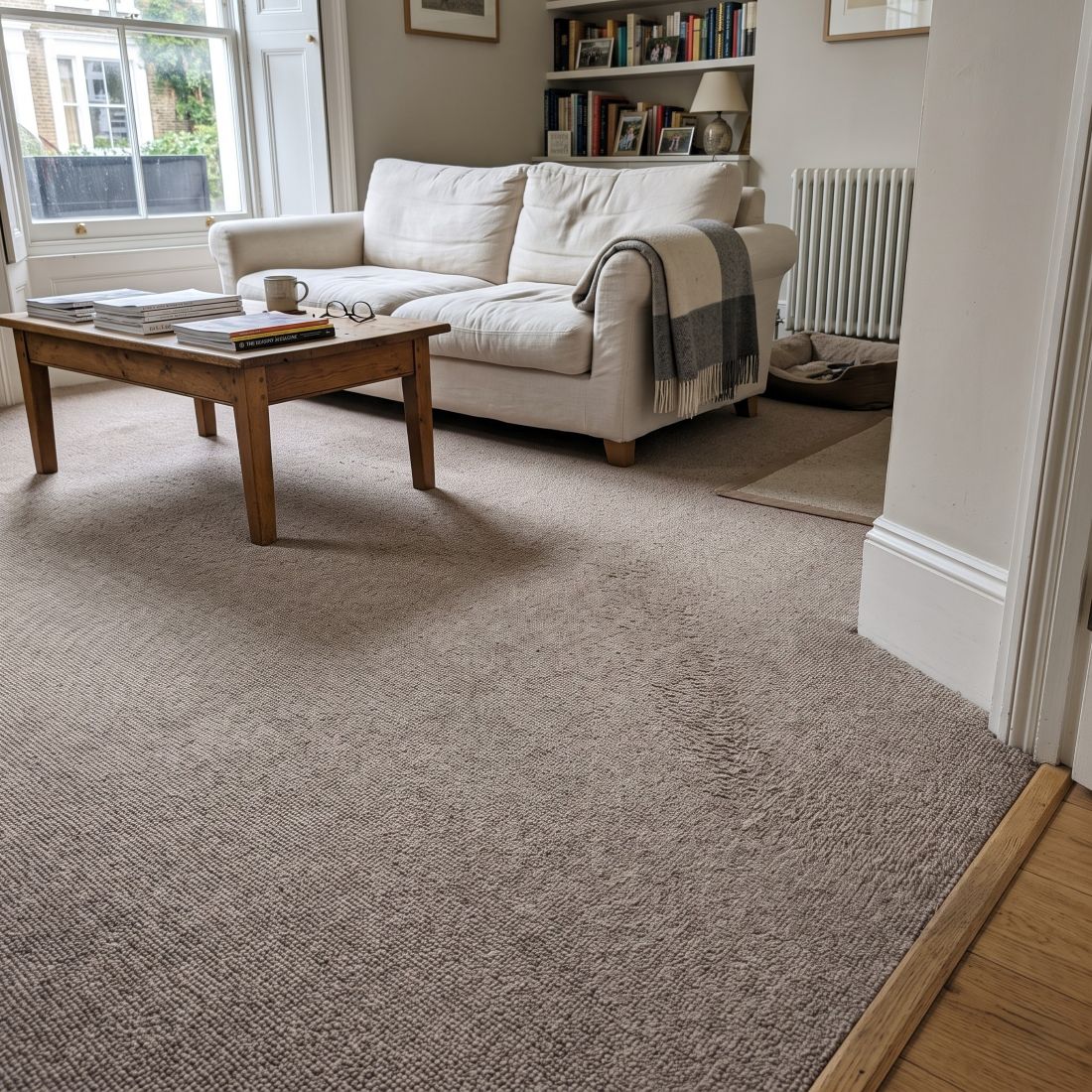
A polypropylene carpet often looks worn out long before it actually is, because the fibre flattens rather than wears away. Under steady foot traffic the upright tufts bend over and lie flat, and once they do they catch the light quite differently, taking on the dull, shadowy, slightly shiny look most people read as wear. The crucial point is that the fibres are still there and still intact; they have simply been pressed down rather than ground away. This matters because a flattened carpet is frequently recoverable, while a genuinely worn one is not, and the two are easy to confuse. It is a common source of frustration in the rental flats and busy hallways of Hampstead, where polypropylene is a popular, hard-wearing and affordable choice that nonetheless shows traffic lanes sooner than its owners expect. Knowing what is really happening underfoot changes how you respond to it.
What Is Polypropylene Carpet and Why Does It Flatten?
Polypropylene carpet flattens easily because the fibre has low resilience, meaning it does not spring back to its upright position the way more elastic fibres do. Polypropylene, also sold as olefin, is a synthetic material prized for being stain-resistant, moisture-resistant and inexpensive, which makes it a sensible choice for busy and budget-conscious homes.
Its weakness is not strength but memory. The fibre is tough, yet it lacks the natural bounce that helps a carpet stand back up after being walked on.
Resilience Versus Durability
It is worth separating two ideas that are often muddled: durability, which is how well a fibre resists damage, and resilience, which is how well it recovers its shape. Polypropylene scores reasonably on the first and poorly on the second, so it endures spills and scrubbing admirably while struggling to keep its pile upright. Wool and nylon, by contrast, have a built-in springiness that lets them rebound from compression, which is why they hold their look longer in high-traffic areas. With polypropylene, the same pressure that other fibres shrug off leaves a lasting impression in the pile. This is also why two carpets of similar age can look so different: the more resilient fibre disguises its traffic while the polypropylene displays it. Understanding this trade-off explains why a perfectly sound polypropylene carpet can start to look tired surprisingly early in its life.
What Is the Difference Between a Flattened Carpet and a Worn One?
The difference is that a flattened carpet has bent but undamaged fibres, while a worn carpet has fibres that are abraded, frayed or missing altogether. Flattening, also called crushing or matting, is a change of shape; wear is a loss of material, and only one of them can be reversed.
This distinction is the single most useful thing to understand about an ageing polypropylene carpet. One problem is cosmetic and often temporary, the other is structural and permanent.
How to Tell Which You Have
A simple check helps. Run your fingers through the pile in a dull-looking patch and look closely at the individual fibres: if they are full-length and merely lying flat, the carpet is crushed rather than worn, and grooming or professional treatment stands a good chance of lifting it. If instead you see short, broken, fuzzy fibres, thin patches where the backing shows through, or a rough texture quite unlike the surrounding carpet, that is true wear and no amount of cleaning will restore it. Crushed pile also tends to follow the obvious paths people take, whereas wear concentrates at the very points of heaviest abrasion. Diagnosing it correctly saves you from either replacing a carpet that could be revived or paying to clean one that is genuinely finished.
Why Does a Flattened Carpet Look So Much Worse Than It Is?
A flattened carpet looks worse than it is because crushed fibres reflect light in a way that reads as dirt, shading or wear even when the carpet is clean and sound. An upright pile scatters light evenly and looks rich and uniform, while a flattened pile presents the sides of the fibres to the eye, creating a shinier, darker or greyer appearance.
This is essentially an optical effect, not a measure of cleanliness. The carpet has not changed colour; only the angle of its fibres has.
The Optics of Crushed Pile
Because the bent fibres lie in roughly the same direction along a walkway, they form a continuous band that catches the light differently from the surrounding upright pile, which is why traffic lanes appear as distinct tracks across a room. People often respond by cleaning these lanes repeatedly, only to find the marks remain, because the issue was never dirt in the first place. The same effect is what makes a flattened polypropylene carpet look prematurely aged: the dull tracking suggests heavy wear when the fibres are perfectly intact underneath. Once you recognise the look as crushed pile rather than damage, the carpet stops seeming like a lost cause and starts looking like a problem with a possible solution. It also explains why the tracks can seem to come and go depending on the time of day, since changing light hits the bent fibres at different angles.
Where Does Flattening Show Up First?
Flattening shows up first in the places that take the most repeated pressure, which means the main walkways, doorways and the spots where people pause or turn. Anywhere feet pass over the same ground again and again, the pile is pushed down faster than it can recover.
The pattern is predictable once you know to look for it. Traffic concentrates along certain routes, and those routes flatten first.
The Usual High-Traffic Routes
Hallways are the classic example, along with the foot of the stairs and the desire lines that run from door to door across a living room. The narrow, much-used hallways and staircases typical of Hampstead’s period conversions tend to crush quickest of all, simply because every journey through the home funnels across the same strip of carpet. Pivot points where people turn, the area in front of a frequently used sofa, and the tracks left by rolling office chairs all flatten ahead of the rest of the room too. Spotting these zones early is useful, because flattening caught soon is generally easier to lift than crushing that has been set into the pile for years. The earlier it is addressed, the better the recovery.
Can a Flattened Polypropylene Carpet Be Revived?
A flattened polypropylene carpet can very often be revived, because the fibres are intact and simply need to be coaxed back upright. The most reliable results come from professional treatment, though some improvement is achievable at home with patience and the right tools.
Heat is the key, and here polypropylene’s nature works in your favour. The fibre is thermoplastic, which means warmth softens it enough to be reshaped.
The Role of Heat and Grooming
Hot water extraction, often called steam cleaning, combines heat, moisture and suction to relax the crushed fibres and draw them back to standing, and it is one of the most effective ways to lift flattened pile. Professionals may follow this with a pile rake or carpet groomer that lifts and separates the fibres while they are warm and pliable. At home, gentler versions of the same idea can help: carefully working the area with a stiff brush, or applying a little warmth and then grooming the pile upright, will often restore a noticeable amount of bounce. Results depend on how long the carpet has been crushed and how much heat the fibre will take without risk, which is why long-set matting is best left to someone with the proper equipment. Even partial recovery can transform how a room looks.
How Do You Stop a Polypropylene Carpet Flattening?
You slow a polypropylene carpet from flattening by spreading out the traffic it takes and grooming the pile regularly so it never stays crushed for long. The fibre’s low resilience cannot be changed, so prevention is about managing the pressure rather than expecting the carpet to recover on its own.
Reducing concentrated traffic is the first line of defence. The more the load is shared across the floor, the slower any single strip wears in.
A Simple Maintenance Routine
Runners and rugs over the busiest walkways take the brunt of the footfall, while rearranging furniture periodically shifts the traffic lanes so no single path is pounded continuously. Regular vacuuming does more than clean; by lifting and agitating the pile it helps the fibres stand back up before flattening sets, and occasional grooming with a carpet rake keeps the surface upright between deeper cleans. Moving heavy furniture a little now and then prevents permanent dents from forming under the legs. None of this defeats the fibre’s basic tendency, but together these habits keep a polypropylene carpet looking fuller and fresher for far longer than it would if left to its own devices. A modest routine goes a long way with this particular material.
Frequently Asked Questions
Does polypropylene carpet wear out quickly?
Not usually; it tends to look worn long before it actually is. Polypropylene is a durable, stain-resistant fibre, but because it has low resilience it flattens under traffic, and that flattening is frequently mistaken for wear. The carpet is often structurally fine and simply needs its pile lifted.
How do you fluff up a flattened carpet?
Warmth and grooming are the most effective combination. Applying heat and moisture, as in steam cleaning, relaxes the crushed fibres so they can be brushed or raked back upright. For small areas at home, gently working the pile with a stiff brush after warming it can bring back a good deal of its body.
Does steam cleaning fix flattened carpet?
It often does on polypropylene, because the fibre is thermoplastic and responds well to heat. Hot water extraction relaxes the bent fibres and the suction helps draw them upright again, lifting much of the flattening. Long-set matting may only partially recover and is best handled professionally.
Is polypropylene carpet good quality?
It is good value rather than premium, with real strengths and one clear weakness. It resists stains and moisture well and is affordable, which suits busy or budget-conscious homes, but its tendency to flatten means it shows traffic sooner than wool or nylon. Knowing this lets you maintain it accordingly and judge it fairly.